



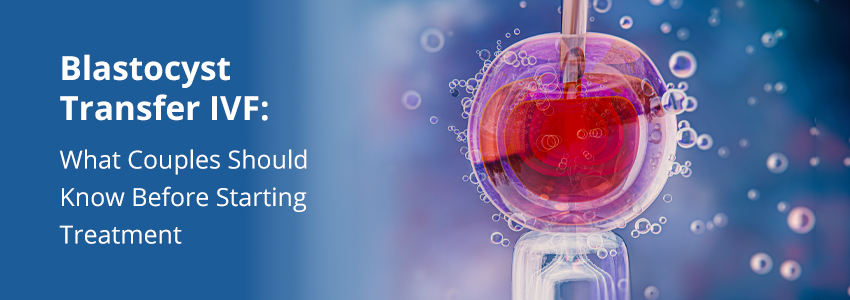
Starting IVF can feel a little overwhelming, especially when you come across medical terms like "blastocyst IVF" or "blastocyst transfer IVF" If you're preparing for treatment and want to understand what this process involves, you're not alone. Most couples begin IVF with plenty of questions, hopes, and understandable nervousness. So, here's a clear, friendly explanation to help you understand blastocyst transfer IVF and feel more confident before you begin.
Blastocyst transfer IVF is a type of IVF where the embryo is grown in the lab for a little longer-usually about five to six days-until it reaches what's called the "blastocyst" stage. In many regular IVF cycles, embryos are transferred much earlier, around day two or three, when they're still at the "cleavage stage." This stage basically means the fertilised egg has started dividing into multiple cells, but it's still very tiny and hasn't formed any specialised structures yet. During this stage Doctors can see the number of cells, but they don't get as much information about how strong the embryo really is.
In blastocyst transfer IVF, the embryos get a couple more days to develop. This extra time helps doctors see which embryos are growing well and are most likely to lead to a healthy pregnancy.
A blastocyst is basically a more advanced embryo. By this stage, it has divided many times and formed two groups of cells-one group that eventually becomes the baby and another that forms the placenta. Since it's more developed, doctors can understand its growth potential much better than they can with earlier-stage embryos.
Many IVF clinics prefer blastocyst transfer IVF because it often leads to better results. When embryos are grown until day five, something interesting happens-only the stronger embryos usually make it to this stage, while the weaker ones naturally stop developing. This helps doctors clearly see which embryos are healthy and have the best chance of becoming a pregnancy.
Blastocyst IVF or Blastocyst transfer IVF is a promising option for many couples trying to conceive. It gives doctors a clearer view of embryo quality and can improve the chances of pregnancy. However, every couple's fertility journey is unique. Understanding the process, weighing the pros and cons, and staying emotionally prepared can make the experience smoother.
If you're considering blastocyst transfer IVF, take time to discuss everything openly with your doctor. With the right guidance and support, this method can bring you one step closer to your dream of parenthood.
At Abha Surgy Center, years of experience, advanced technology, and expert doctors like Dr. Bani Kumar Mitra come together to give you the highest possible chance of conceiving. With modern techniques and a caring approach, the center not only offers professional Blastocyst transfer IVF treatment but also supports you throughout the entire journey. Their goal is to make sure you feel guided, reassured, and fully supported as you take this important step toward bringing a new life into the world. You can contact now to book your first consultation.